
Humax Pavilion - Tokyo Postmodern Architecture

Wakabayashi, a Kyoto architect from a product design background, was, together with Tadao Ando and Shin Takamatsu, part of a trio of hugely inventive architects who emerged from that city in the febrile atmosphere of 1980s Japan.
Japan in the 80s was a nation hurtling at exponentially increasing speeds into a seething, self-consuming, technologically fantastical, aesthetically ravishing future, fuelled by a turbo-charged mixture of industrial innovation, financial speculation, and the biggest real-estate bubble the world had ever seen.
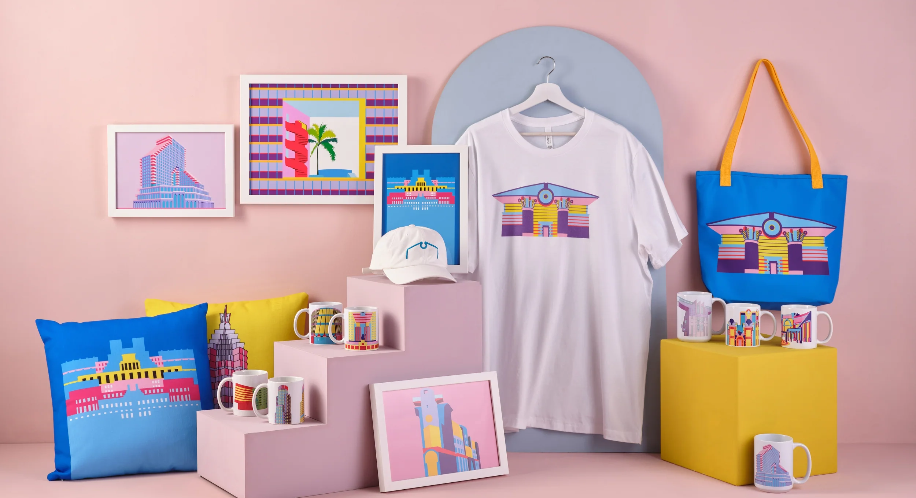
Explore our Humax Pavilion collection featuring prints, mugs, apparel and much more.

An unprecedented wave of new development transformed the nation’s cities, feeding off quite literally insane land valuations that saw property selling in Ginza for $750,000 a square meter, and which meant the land on which the Imperial Palace sat in Tokyo was calculated to be worth more than all the real estate in the whole of California combined.
While Japanese corporations were hoovering up companies around the world, small rural towns with more money than they knew what to do with were building gigantic museums, stadiums and bridges, and Japanese businessmen were happy to spend $80 million dollars for a single painting, a riotous sense of raging hyperreality was manifesting itself across Japanese culture.

|
From the dystopian future Tokyos of 'Ghost in the Shell' and Akira, to Hayao Miyazaki’s anime films with their collapsing together of the past and the present, the fantastical and the banal, and the Western and the Japanese, to the urban condition of the country’s great cities, which were rapidly coming to resemble Ridley Scott’s hyper-saturated, dark vision in Blade Runner, the frenetic financial explosion ignited an aesthetic chain reaction that saw the creation of a whole ecosystem of new artistic subcultures and forms of expression. The efflorescence of strange new forms was particularly marked in Architecture, in which a generation of designers produced some of the most distinctive buildings to be found anywhere in the world. Wakabayashi was one of the most notable figures in this period, and his Humax Pavilion in Tokyo perfectly captures much of the dark and intense mood of that period, embodying both the simultaneous impulse to be technologically fantastical as well as moodily historical, and the desire to encrust the entire form of the building, inside and out, in a bristling cacophony of brooding ornament. As he put it “it is an irrational instinct for man to long for the future while latently having a desire to refer back to the past, this architecture is the best embodiment of this instinct.” It looms with fantastically theatrical menace over Shibuya, like a gigantic, ancient, futuristic artefact. I hope you visit it if you are ever in Tokyo, and of course I do hope you visit the collection of prints and products we created that celebrate its bristling strangeness... you can browse all our Humax products HERE, see all the Japanese buildings we have collections for, including many postmodern examples of this kind, HERE |


